 By admin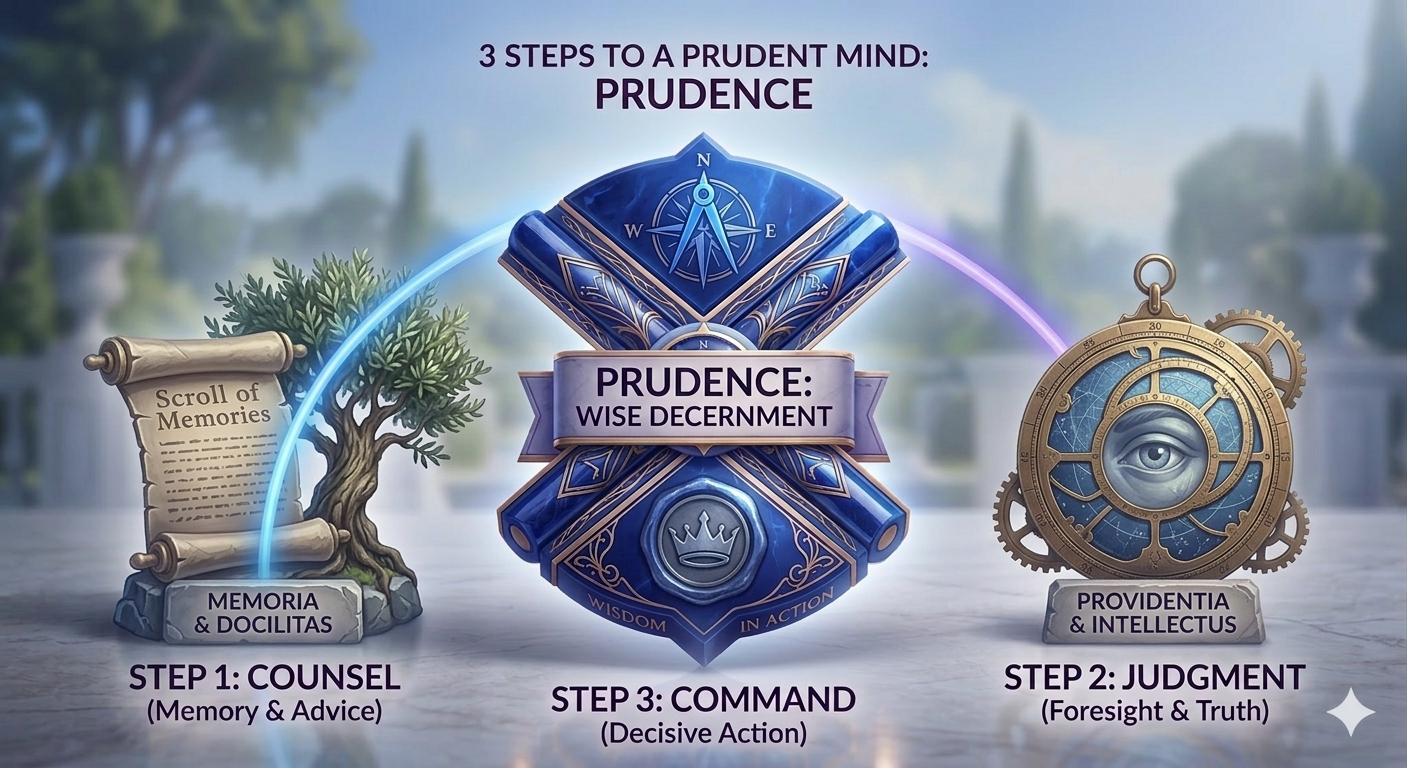
We live in a world that loves speed, bold moves, and instant reactions. We are constantly told to “trust our gut,” leap before we look, and hustle at all costs. Furthermore, in a culture like this, the word prudence sounds a bit dusty. It makes us think of someone timid, overly cautious, or hesitant to take a risk.
But history’s greatest thinkers saw it completely differently. To them, prudence wasn’t a brake pedal—it was a steering wheel.
In fact, classical philosophy names Prudence as the very first of the four Cardinal Virtues. It was given a magnificent title: Auriga Virtutum, or the charioteer of the virtues. Why? Because without prudence to guide them, all other good intentions run wild and turn destructive.
Let’s break down what this virtue actually means and how it can become your ultimate tool for navigating modern life.
“Prudence is right reason applied to practice.” — Thomas Aquinas
What is Prudence, Really?
Thomas Aquinas beautifully simplified it: prudence is simply wisdom in action. It is the practical habit of looking at a chaotic situation objectively, figuring out what the truly “good” outcome is, and then choosing the absolute best path to get there.
Think of it as your internal GPS. A GPS doesn’t drive the car for you, nor does it tell you to park on the side of the road forever out of fear. It simply looks at the map, calculates the traffic, avoids the hazards, and shows you the smartest route forward.
Moreover, without Prudence, the other virtues lose their way:
- Courage without prudence becomes reckless stupidity.
- Generosity without prudence becomes enabling or financial ruin.
- Justice without prudence becomes cold, rigid harshness.
Prudence is the supervisor that makes sure your good intentions actually produce good results.
The Anatomy of a Prudent Choice
   [ STEP 1: COUNSEL ]          [ STEP 2: JUDGMENT ]           [ STEP 3: COMMAND ]
   Gathering the Data           Weighing the Options           Executing the Choice
  (Look Back & Listen)          (Filter Out the Ego)          (Overcoming Hesitation)
           │                             │                              │
           ▼                             ▼                              ▼
 👥 Docility & Memory          ⚖️ Foresight & Truth          ⚡ Decisive Action
Step 1: Counsel (Deliberation)
- The Blueprint: A quiet, reflective workspace iconography.
- The Core Action: This is the intake phase where you pause to gather information. True counsel requires looking backward at your own history (Memory) and looking outward to seek advice from people wiser than yourself (Docility). You are gathering the puzzle pieces before attempting to put the image together.
- The Anti-Pattern to Avoid: The Impulsive Blindspot — moving so fast that you rely entirely on instant emotional reactions rather than actual facts.
Step 2: Judgment (Evaluation)
- The Blueprint: A precise balance scale or analytical checklist framework.
- The Core Action: Once you have the facts, you actively weigh them against reality. You filter out your ego, immediate temptations, and short-term anger to find the path that aligns with genuine truth. This requires Foresight—calculating exactly where this decision will land your family, business, or character six months down the road.
- The Anti-Pattern to Avoid: Rationalization — lying to yourself to make a bad choice feel like a good one just because it’s easier.
Step 3: Command (Execution)
- The Blueprint: An open doorway, a forward arrow, or a decisive lightning bolt.
- The Core Action: This is the absolute peak of the virtue. Prudence is a practical muscle meant for doing. Not just overthinking. Once you have sought counsel and made a sound judgment. You must firmly command yourself to act. Also, true prudence does not stay stuck in analysis paralysis; it executes with complete confidence and clarity.
- The Anti-Pattern to Avoid: Indecision — sitting on the fence forever because you are too afraid to pull the trigger.
The Prudence Formula: Counsel prepares the mind. Judgment identifies the path, but Command actually crosses the finish line. Moreover, without step three, wisdom is just a beautiful idea left on paper.
Bringing Prudence into Everyday Life
How does this look on a random Tuesday? It’s much more practical than you think:
- In Conversation: It’s that split-second pause before you reply to an irritating text or email. Prudence asks: “Will this response fix the problem, or just feed my ego for five seconds?”
- In Business & Projects: It’s the discipline to thoroughly research. Planning a new venture or website build before pouring all your resources into it. Also, ensuring your foundation is rock solid.
- In Personal Habits: It’s the ability to say “no” to a short-term pleasure because you value your long-term health, peace of mind, or financial stability.

Join the Conversation
Building a virtuous life is a journey best shared with others. We want to hear from you as we grow this community together!
What is one small thing that happened today that you are truly grateful for?
Maybe it was a quiet cup of coffee. A kind word from a stranger, or a project finally coming together. Please leave a comment below and share your moment with us. Your story might be exactly what someone else needs to hear today.
Coming Soon: Ready to start your own practice? Be sure to check out our next blog post, “The First Steps to Virtue: Practical Ways to Practice Gratitude,” where we provide a step-by-step 7-day challenge to help you integrate these benefits into your daily routine!
Also, check out the article on “Giving Gratitude”.
