 By admin
The Sovereign and the Servant
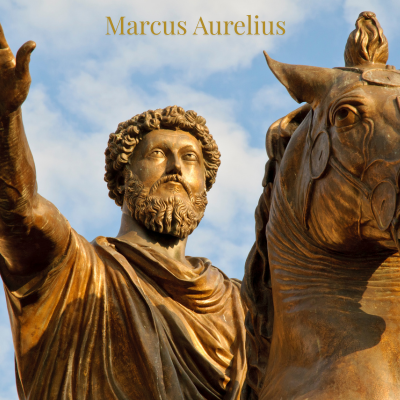
Prudence is powerfully displayed by one of the historical greats Marcus Aurelius.
We live in a world that is absolutely obsessed with status. Look around you—everyone is trying to look like a king on social media. People build fake empires out of likes, chase titles, puff out their chests, and let their egos drive every single decision. They think leadership means shouting the loudest, demanding respect, and hoarding power.
But true manhood—and a life of virtue—demands a completely different playbook. It requires two virtues that modern culture has mistakenly labeled as “soft” or “boring”: Prudence and Humility.
Let’s get something straight. Prudence isn’t about being timid or afraid to take a risk. Moreover, prudence is high-level tactical thinking. It is the ability to look past the chaos of the moment, see reality exactly as it is, and make the right decision for the long haul. And Humility? It isn’t weakness; it’s ultimate self-awareness. It’s knowing that no matter how smart, rich, or powerful you are, you are still just a man, subject to the same laws of nature as everyone else.
If you want to see what happens when a man weaponizes these two virtues, you look at the ultimate historical example: Marcus Aurelius.
Not an academic debating philosophy in a safe classroom. He was the Emperor of Rome. He had absolute, unchecked power over the known world. Yet, he used prudence and humility to keep his feet firmly on the ground. His life gives us the exact blueprint for keeping our heads straight when everything around us is going crazy.
Part 1: The Trap of Absolute Power
Imagine waking up tomorrow and realizing that your word is literal law. If you are angry at someone, they disappear. Moreover, if you want luxury, it is brought to you instantly. No one can tell you “no.” Every single person you meet bows, scrapes, and tells you exactly what you want to hear.
That was Marcus Aurelius’s daily life. He was the most powerful man on the planet. Also, he controlled an empire that stretched from the sands of Egypt to the rainy hills of Britain. History shows us that absolute power almost always corrupts. It turns men into tyrants, driving them insane with greed and ego.
Prudence – Cultivation of Character
So, how did Marcus survive it? He survived it through an intense, daily practice of humility.
Every night, in his military tent while fighting brutal campaigns on the freezing Danube frontier, Marcus would light a lamp and write in his private journal. He didn’t write it for publication; he wrote it to lecture himself. Today, we know this book as Meditations.
In those pages, the Emperor of Rome constantly reminded himself of his own insignificance. He wrote:
“Pass over into your mind, and see what kinds of things are there… Remember that all is opinion, and that opinion is in your power.”
Moreover, he would look at his royal purple robes—the ultimate status symbol in the ancient world—and write down that it was just sheep’s wool dyed with the blood of a shellfish. He looked at his lavish feasts and reminded himself that the expensive meat was just a dead pig or a dead bird. Also, Marcus Aurelius stripped away the glamor and looked at reality.
The Lesson for Us: Humility is your shield against arrogance. You might not be the Emperor of Rome, but when you get a promotion, buy a nice truck, or find some success, it is incredibly easy to let your ego take the wheel. Humility doesn’t mean thinking less of yourself; it means thinking of yourself less. Also, it means stripping away the hype, looking in the mirror, and remembering that your title doesn’t make you a better man—your character does.
Part 2: Prudence of the Golden Hour
True prudence is the gap between a trigger and your reaction. When you lack prudence, you react instantly to every insult, every bad piece of news, and every sudden problem. You let your emotions make your choices.
Marcus Aurelius faced endless triggers. He was betrayed by his most trusted general and closest friend, Avidius Cassius, who attempted to steal the throne. He faced a devastating plague that wiped out millions of his citizens. Also, he faced constant, brutal wars.
Marcus Aurelius – Not Your Average Leader
An average ruler would have reacted with blind rage, executing anyone suspected of treason and panicking in the face of disaster. But Marcus used prudence to create a “golden hour” of calm.
When he found out his friend had betrayed him, Marcus didn’t launch a bloody purge. Instead, he called his soldiers together and gave a stunning speech. He told them that he wasn’t angry, and that his only regret was that he wouldn’t get the chance to show mercy to his friend and forgive him face-to-face. When Cassius was assassinated by his own officers before Marcus could get to him, the Emperor actually wept because the opportunity for grace had been lost.
Marcus used prudence to see the big picture. He knew that reacting with blind vengeance would only fracture the empire further. He chose the path that served the common good, not his wounded pride.
As he famously wrote to himself:
“The best revenge is to be unlike him who performed the injury.”
The Lesson for Us: When someone wrongs you—whether it’s a coworker stabbing you in the back, a nasty comment online, or a family dispute—your gut reaction is to hit back harder. Prudence tells you to pause. It asks: “If I react in anger right now, what does this look like in five years?” Prudence gives you the tactical foresight to swallow your pride, de-escalate the chaos, and choose the response that builds your life up instead of tearing it down.
Part 3: Leading from the Mud
The ultimate test of Marcus’s prudence and humility came during the Marcomannic Wars. He spent the last decade of his life living in muddy, freezing military camps, commanding legions in the wilderness. Marcus Aurelius was an aging man, plagued by chronic stomach pain and poor health, yet he didn’t hide away in a golden palace in Rome. He stayed with his men in the dirt.
When the Roman treasury ran completely dry due to the twin crises of war and the plague, Marcus didn’t raise taxes on his suffering people. That would have been the easy, short-sighted fix.
Instead, he practiced radical prudence and humility. He brought out all the treasures of the imperial palace—golden cups, crystal vessels, silk robes, and his wife’s royal jewelry—and held a massive public auction in the Roman Forum. Furthermore, he sold off his own luxury to fund the state and protect his people. He put his money where his mouth was.
He didn’t care about looking like an all-powerful, wealthy sovereign. His concern was about doing his job. He viewed the presidency of Rome not as a privilege to be enjoyed, but as a heavy duty to be executed with honor.
The Call to Action (Prudence): Walk the Path of the Sovereign Servant
Marcus Aurelius shows us that the highest form of power is self-control. You can control an army, a business, or a household, but if you cannot control your own ego and your own impulses, you are a slave.
Prudence and humility are not about shrinking back. They are the twin engines of a bulletproof character.
- Prudence gives you the vision to see through the noise and make the right call.
- Humility gives you the grounding to remember who you are and keep your ego in check.
This week, when life throws a wrench in your plans, or when someone pushes your buttons, don’t react like an amateur. Take a breath. Step back. Channel your inner Roman Emperor. Look at the situation with absolute clarity, check your ego at the door, and choose the path of virtue.
How do you handle moments when your ego wants to take over? Let’s talk about how we can build better daily habits for prudence in the comments below.
