 By admin
How Benjamin Franklin Used Temperance to Build an Empire From Nothing
Temperance is your best chance to break free. Let’s be completely honest with each other. We live in an era of total overindulgence. Everywhere you look, society is screaming at you to consume more, buy more, eat more, and drink more. We are flooded with cheap dopamine, instant gratification. Also, 24-hour delivery services designed to satisfy our every whim before we even have time to think.
But true manhood—and a life of virtue—demands a completely different level of discipline. It requires a foundational trait that isn’t flashy, but acts as the bedrock for everything else: Temperance.
Temperance – One of the Cardinal Virtues
Most people hear the word temperance and they immediately think of boring historical protests or people giving up alcohol entirely. But that’s a massive misunderstanding. True temperance isn’t about miserable deprivation; it’s about mastery. It is the ability to control your appetites rather than letting your appetites control you. It’s knowing exactly when to say, “That’s enough,” so that you keep your mind sharp and your body ready for action.
If you want to see what this looks like in the everyday world, you look at a man who started with absolutely nothing—no money, no status, no connections—and used this single virtue to conquer his own flaws and build a legacy that changed the world: Benjamin Franklin.
Ben Franklin wasn’t born a polished, disciplined saint. He was a regular guy with a massive appetite for life, food, and fun. But he realized early on that without temperance, he would never be free. His life gives us the exact, practical blueprint we need to take back control of our focus today.
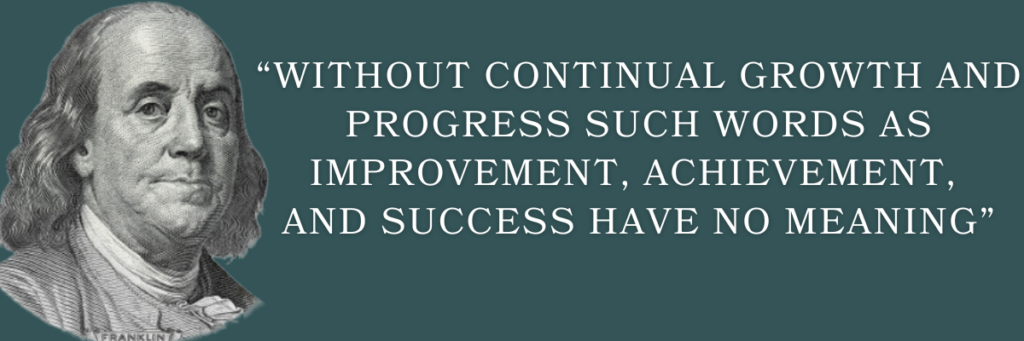
Part 1: The Project of the Thirteen Virtues
When Benjamin Franklin was twenty-six years old, he looked at his life and realized he was a mess of bad habits. He was smart and hardworking, but he found himself constantly falling into the same old traps—eating too much, drinking too much, wasting time, and letting his impulses run the show.
Instead of throwing his hands up and saying, “Well, that’s just who I am,” Franklin decided to launch a bold, scientific project to completely overhaul his character. He sat down and picked out thirteen virtues he wanted to master.
But Franklin didn’t just list them randomly. He applied a brilliant, tactical layout mindset to his self-improvement project. He realized that some virtues had to come before others because they cleared the path.
Temperance as a Virtue
Do you know which virtue he put at the absolute top of the list? Temperance.
Franklin explained his reasoning beautifully:
“Temperance first, as it tends to procure that coolness and clearness of head, which is so necessary where constant vigilance was to be kept up, and guard maintained against the unremitting attraction of ancient habits, and the force of perpetual temptations.”
He knew that if he couldn’t control his basic appetites for food and drink, his head would be too cloudy, and his will would be too weak to tackle harder things like justice, industry, or humility. Temperance was the gatekeeper. His rule for this virtue was simple and uncompromising: “Eat not to dullness; drink not to elevation.”
The Lesson for Us: You cannot build a successful life, a strong family, or a resilient business if you are a slave to your immediate desires. If you are constantly overeating until you are sluggish, or hitting the bottle to escape reality, you are voluntarily clouding your mind. Temperance is the foundation of the layout. You have to get control of your physical impulses first, or you’ll never have the mental clarity to handle the heavier battles of life.
Part 2: The Water-American in the London Print Shop
To see what Franklin’s temperance looked like under heavy pressure, you have to look at his time as a young man working in a London printing house.
In the 1700s, British print shops were fueled by massive amounts of alcohol. The work was grueling and physical—lifting heavy lead type and operating massive wooden presses all day. Franklin’s coworkers firmly believed that they needed strong beer to give them the physical strength to do the work. They would drink a pint before breakfast, a pint with breakfast, a pint between breakfast and dinner, a pint at dinner, a pint at afternoon tea, and another when they finished work.
They were spending a massive chunk of their weekly wages just to stay constantly buzzed while operating dangerous machinery.
Ben Franklins Secret Weapon
Franklin looked at the situation with clear eyes. He refused to join in. Instead of beer, he drank plain, warm water. His coworkers mocked him, calling him the “Water-American.” They swore he would break down under the physical stress of the job without the strength of the ale.
But Franklin had a secret weapon: temperance made him highly efficient. Because his mind was sharp and his body wasn’t constantly processing alcohol, he could work faster, lift more weight, and make fewer mistakes than any of the men around him. He could carry a massive form of type up and down the stairs in each hand, while the beer-soaked workers needed both hands for a single one.
Eventually, because he wasn’t wasting his money on beer or losing time to hangovers, he out-produced everyone, got promoted, and saved enough money to start buying his own printing equipment. His temperance directly funded his freedom.
The Lesson for Us: Standing your ground when everyone around you is overindulging takes serious guts. Whether it’s coworkers pressuring you to join the gossip, friends pressuring you to overspend to look rich, or a culture telling you to live for the weekend, temperance sets you apart. It might make you an outsider at first, but while everyone else is burning through their health and cash, you are quietly building leverage and strength.
Part 3: The Ledger of Daily Control
Franklin knew that inspiration wears off, but systems last. He didn’t just rely on good intentions to stay temperate; he built a physical tool to hold himself accountable.
Ben Franklin carried a small, leather-bound notebook with him everywhere. Also, he dedicated a page to each virtue, ruling the page with red ink to create a grid with seven columns for the days of the week. Every evening, he would sit down in the quiet of his room, examine his actions, and draw a distinct black spot on the grid for every single time he failed to maintain a virtue that day.
If he ate until he felt sluggish, or drank more than he should have, a black mark went in the temperance row.
His goal was to keep the lines completely clear of spots. He didn’t always succeed—in fact, he admitted that he was shocked to find himself far more full of faults than he originally imagined. But by keeping that daily tally, he forced himself to confront his lack of discipline directly. Over time, the black spots began to disappear, and his self-control became an unshakeable habit.


The Call to Action: Clear Your Grid
Benjamin Franklin’s temperance didn’t shrink his life—it expanded it. By mastering his appetites, he unlocked the time, energy, and wealth required to become an inventor, a diplomat, a writer, and a founding father of a brand-new nation. He proved that a man who can master himself can master almost anything.
We don’t live in 18th-century London print shops anymore, but our battles are exactly the same.
- Today we all face the temptation to scroll mindlessly on our phones for hours instead of focusing on our work or our families.
- We face the urge to overindulge in comfort food and modern luxuries that make us soft and lazy.
- We face the easy trap of letting our moods dictate our productivity.
Temperance is about drawing a line in the sand and deciding who is the master. Are you in charge of your body, or is your body in charge of you?
This week, pick one area where you know you’ve been overindulging. Maybe it’s screen time, maybe it’s alcohol, or maybe it’s just letting laziness run your morning. Ground your heels in, bring back some of that daily accountability, and remember that real freedom starts with self-control.
What is one area where a little more temperance would instantly change the trajectory of your week? Let’s talk about it and hold each other accountable in the comments below.
Check out other great stories from the Hall of Virtue.
